Activation Events
Group sessions where people move together with live sensor feedback, to notice their patterns, break them, and find new ways to respond to each other.
A dance floor is usually a place to let go. In practice, most people bring their habits onto it: the same few steps, the same arm swing, the same way of approaching another person. Those patterns feel like freedom because they are familiar. An activation event uses sensors to make them visible, so that a group can play with them together.
Each event is a live session of SelfSense, the app for tracking and training adaptive variability, scaled from one body to a room. Participants wear Movesense sensors, the SelfSense multi-user server reads all of them at once, and everyone can see in real time whether their movement is locked into a pattern, too repetitive, or adaptive.
BodyOS Playground at Bunker West Berlin
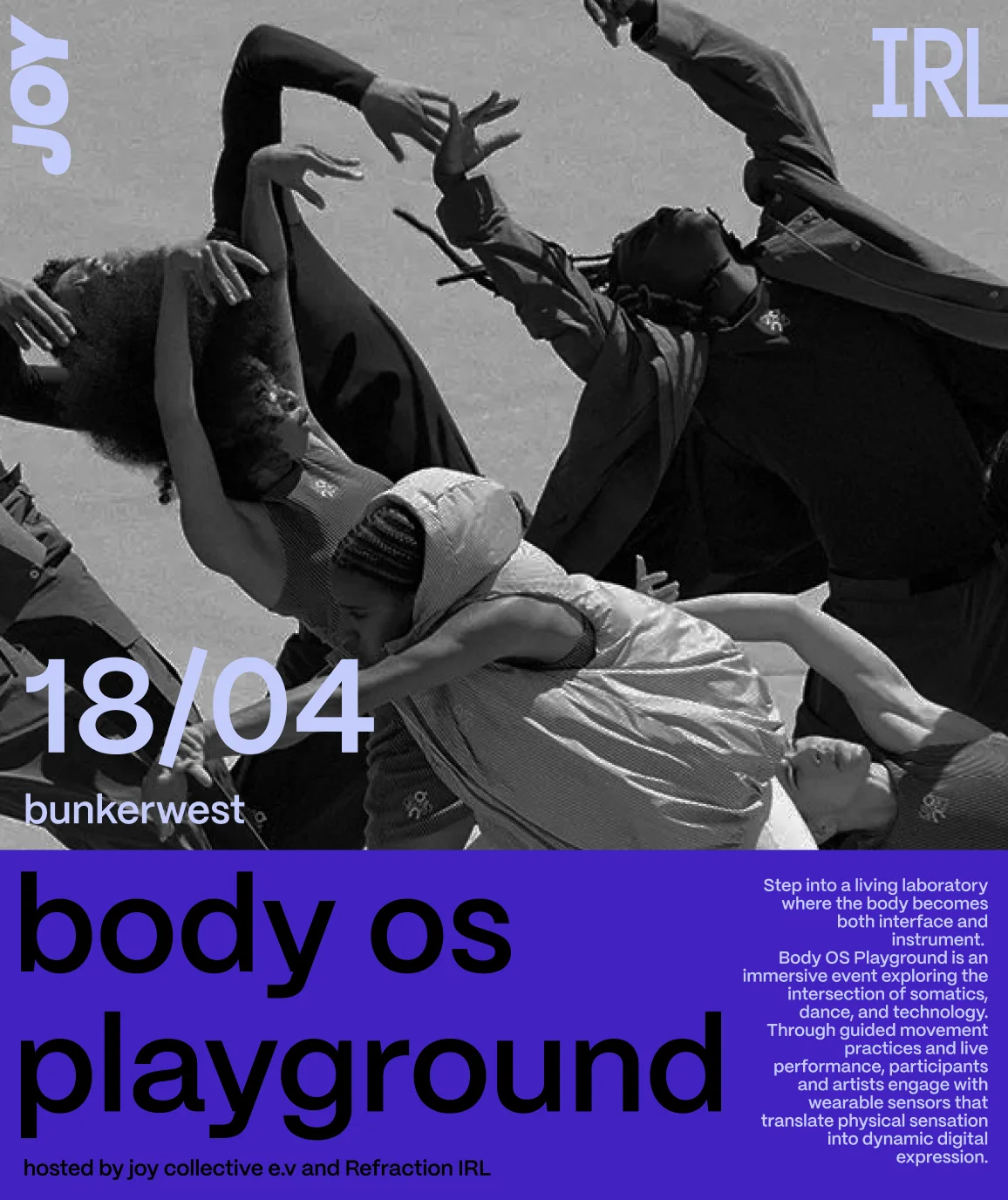
One activation event took place on 18 April 2026 at Bunker West in Berlin, as part of BodyOS Playground, hosted by Joy collective e.V. and Refraction IRL. The evening blended dance, somatics and technology, with sessions by Sophie Mars, Arvy and Dmitry Paranyushkin, a DJ set by ZE:NA and live piano by Michael Ognanier.
Our session was rooted in EightOS, the open-source "operating system for the bodymind" that SelfSense grew out of (the practice behind it is described separately). It invited participants to explore adaptive movement, play with resilience, and move to the beats and the piano with the sensors as a guide.
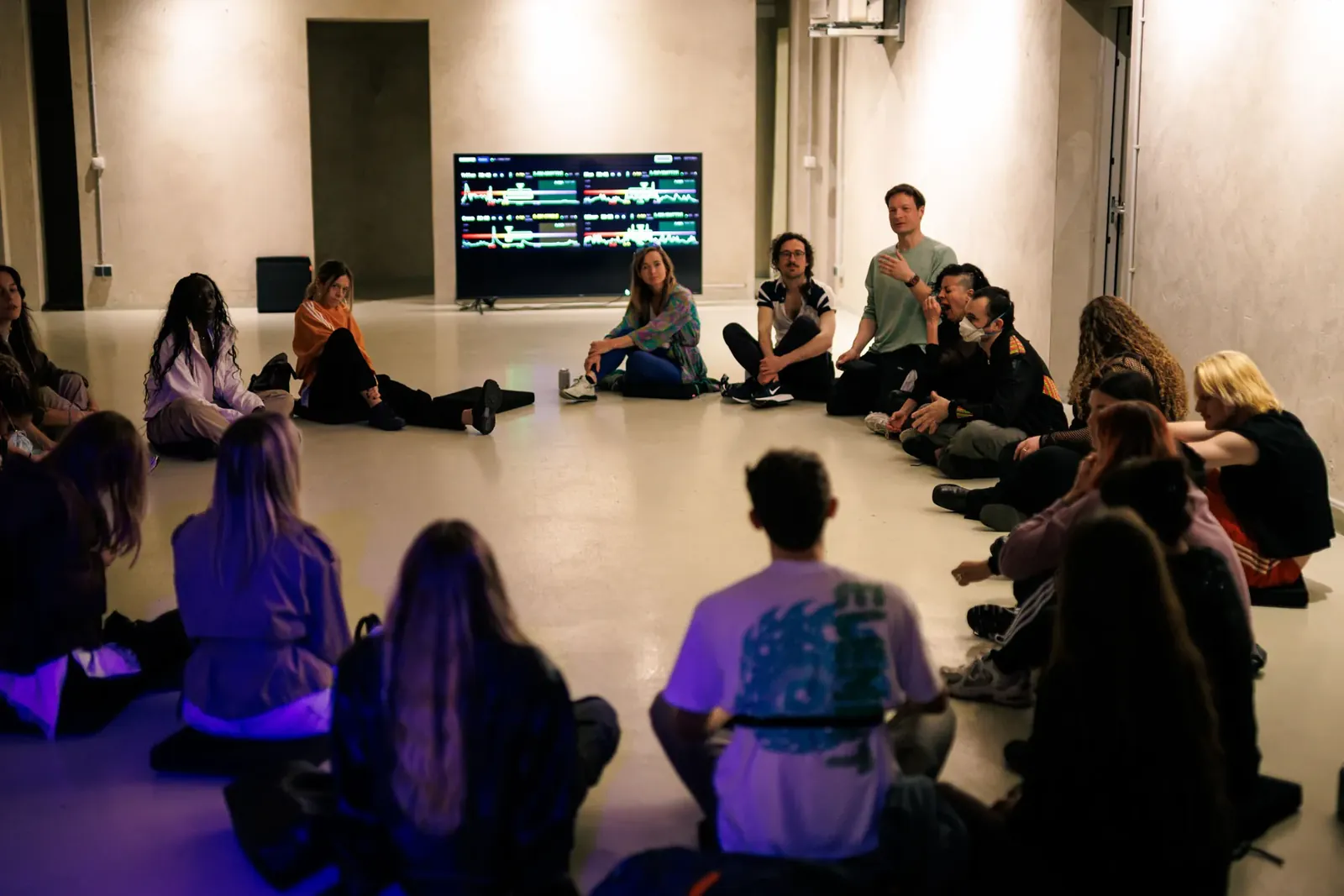
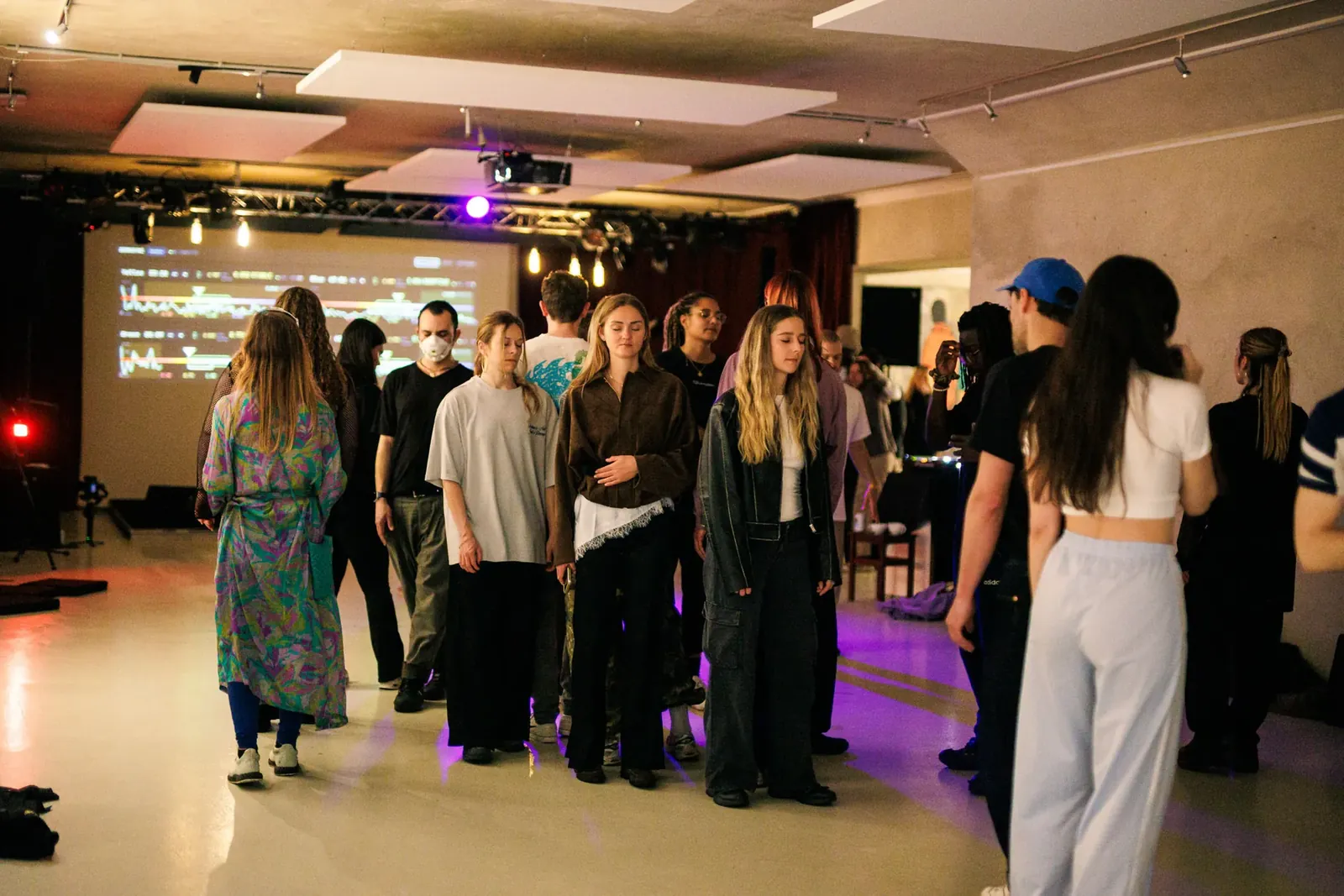
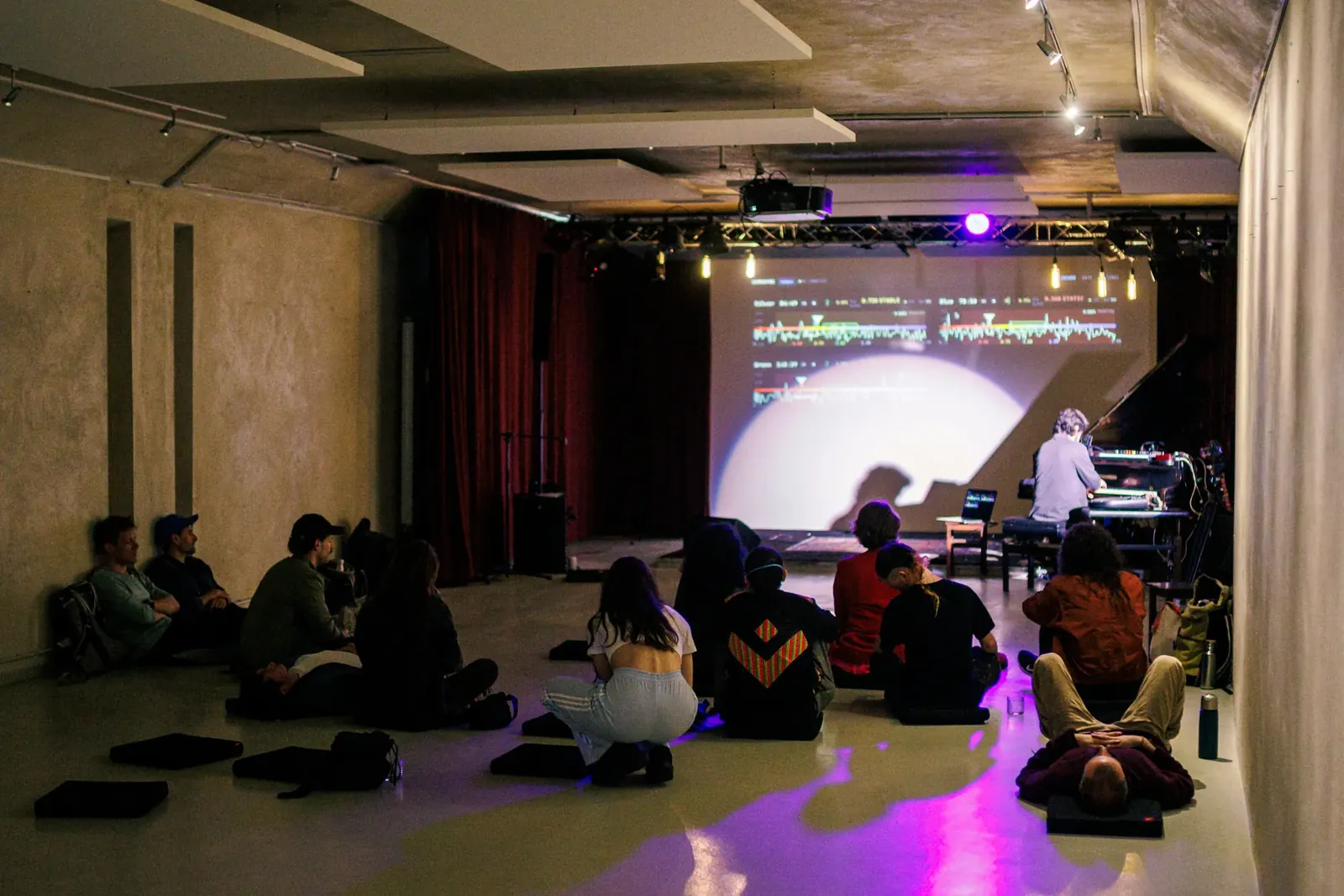
Gathering in a circle on the floor, with the live dashboard on the screens.
The Setup: Sensors and a Shared Screen
Every participant who wanted feedback wore a Movesense sensor on the body. Each sensor streamed its acceleration over Bluetooth to a laptop in the room running the SelfSense multi-user server. The server computes the movement's DFA alpha for every sensor separately: a number that shows how the small changes in a movement relate to the bigger ones (the full explanation is in Adaptive Movement Variability).
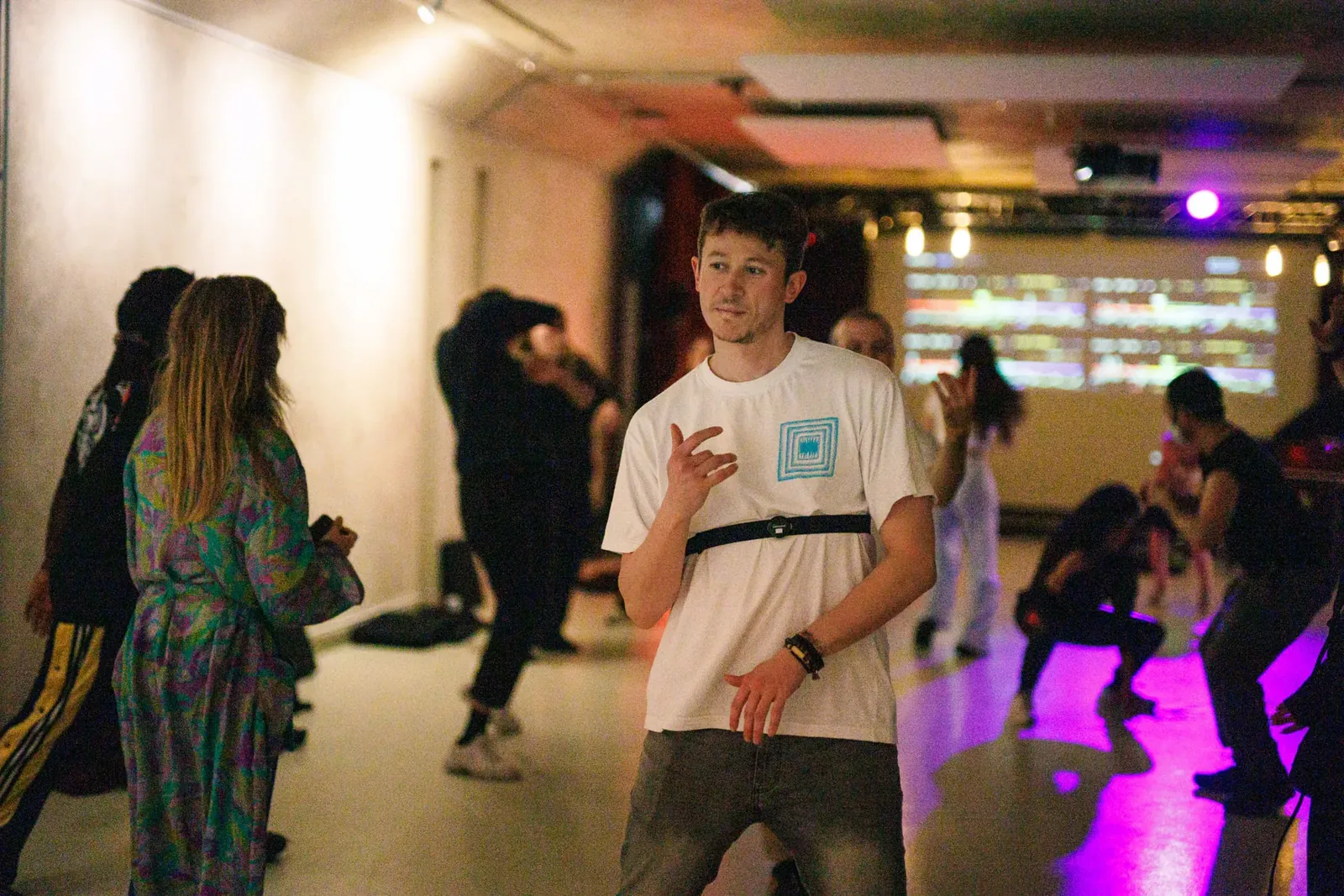
All readings appeared side by side on one dashboard, one panel per person, each with its live signal and its current state:
- Locked into a pattern (α₁ > 1.2): the movement drifts in one direction, one quality takes over and the body stops responding.
- Adaptive (α₁ ≈ 1.0): small and large changes are connected. The movement keeps changing, and the way it changes does not settle into a new habit.
- Too repetitive (α₁ < 0.6): the same small movement over and over, mechanical, with no larger structure.
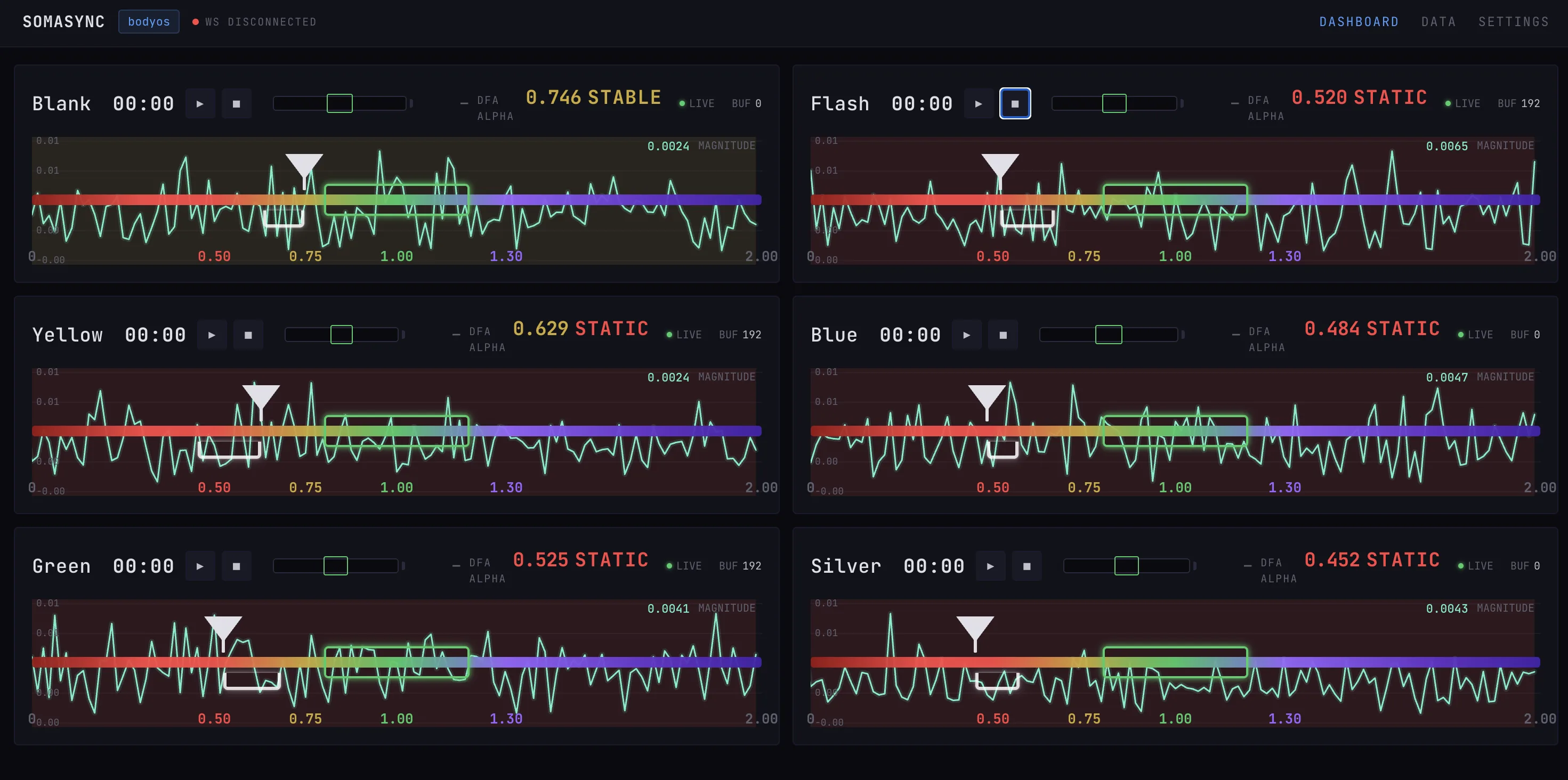
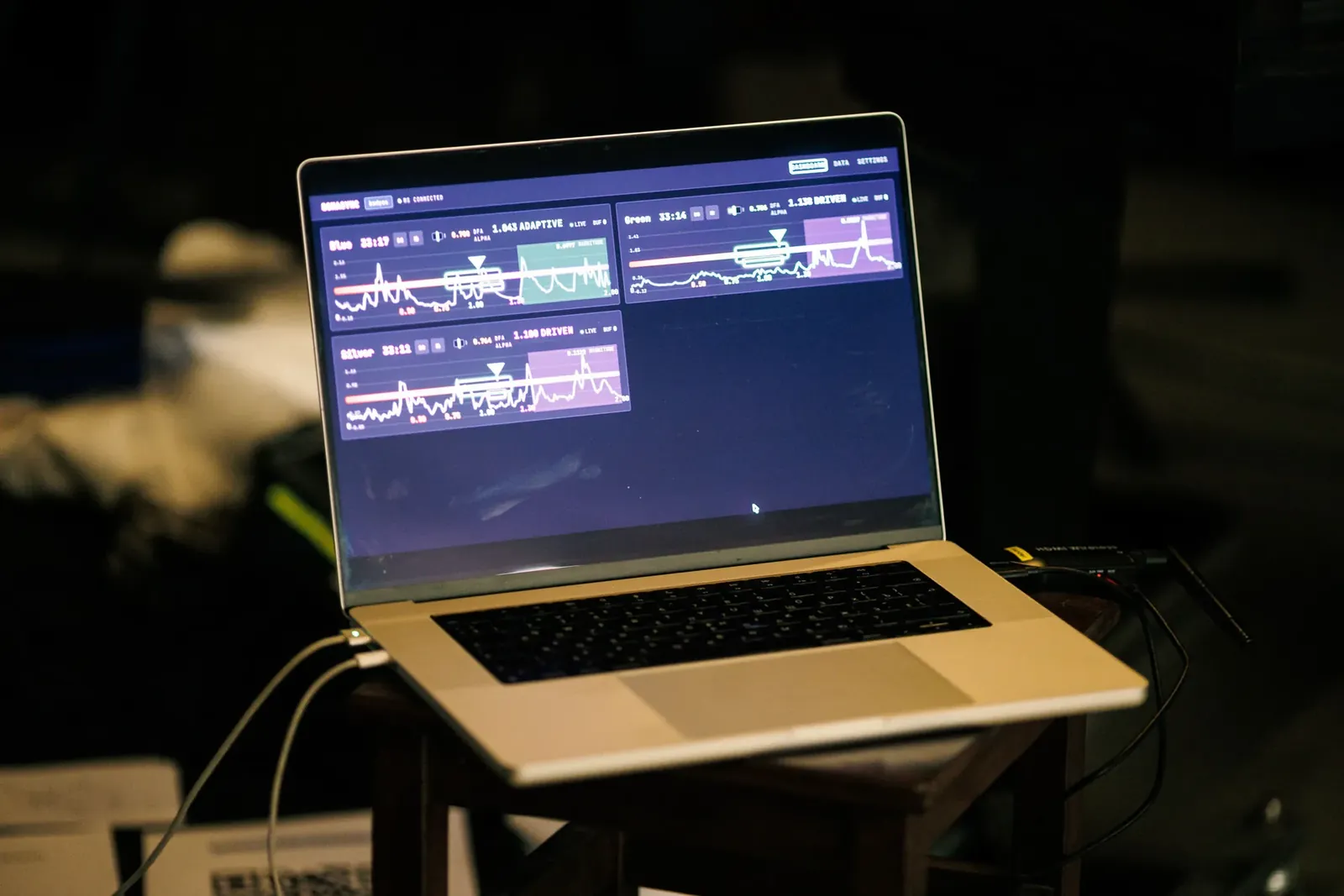
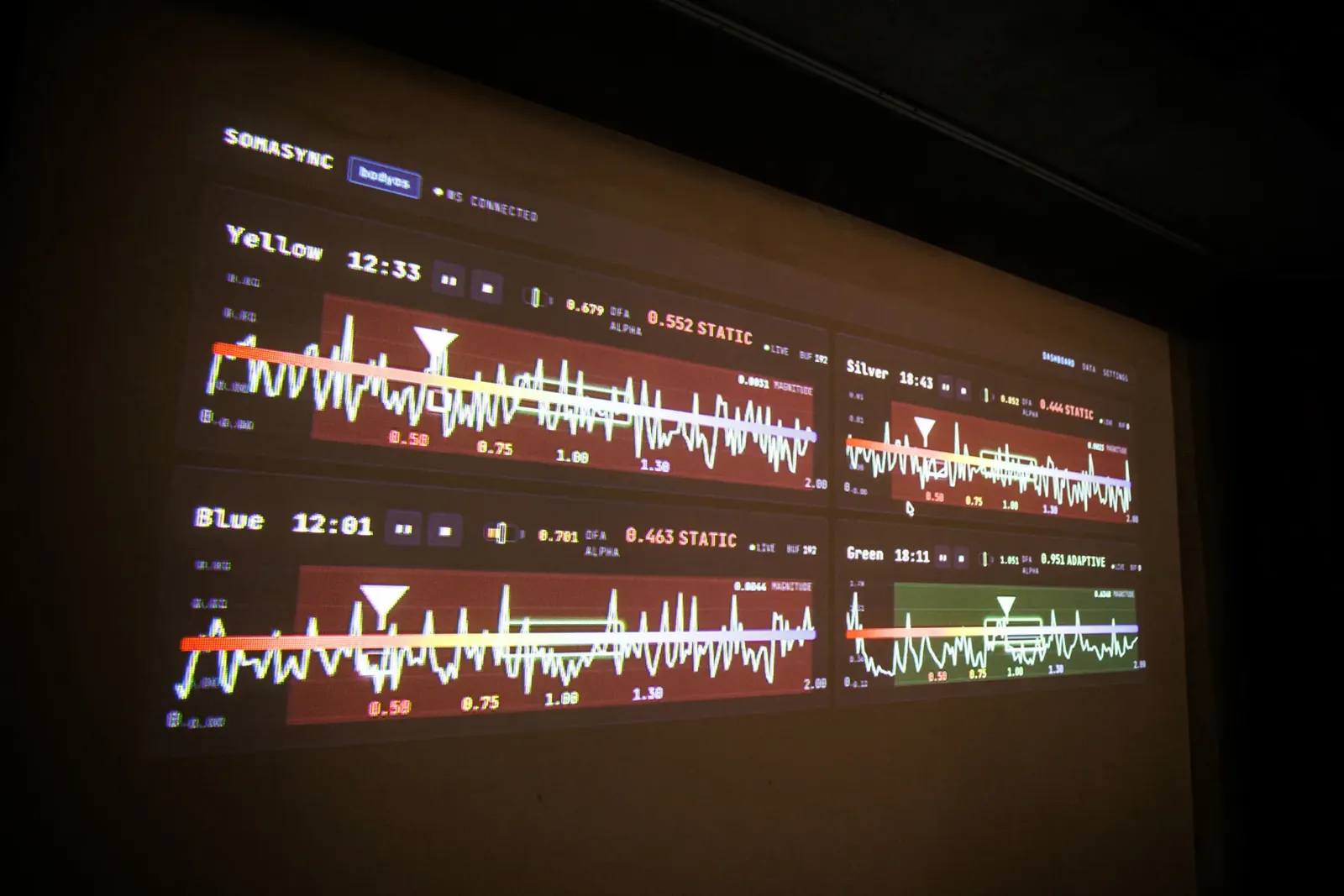
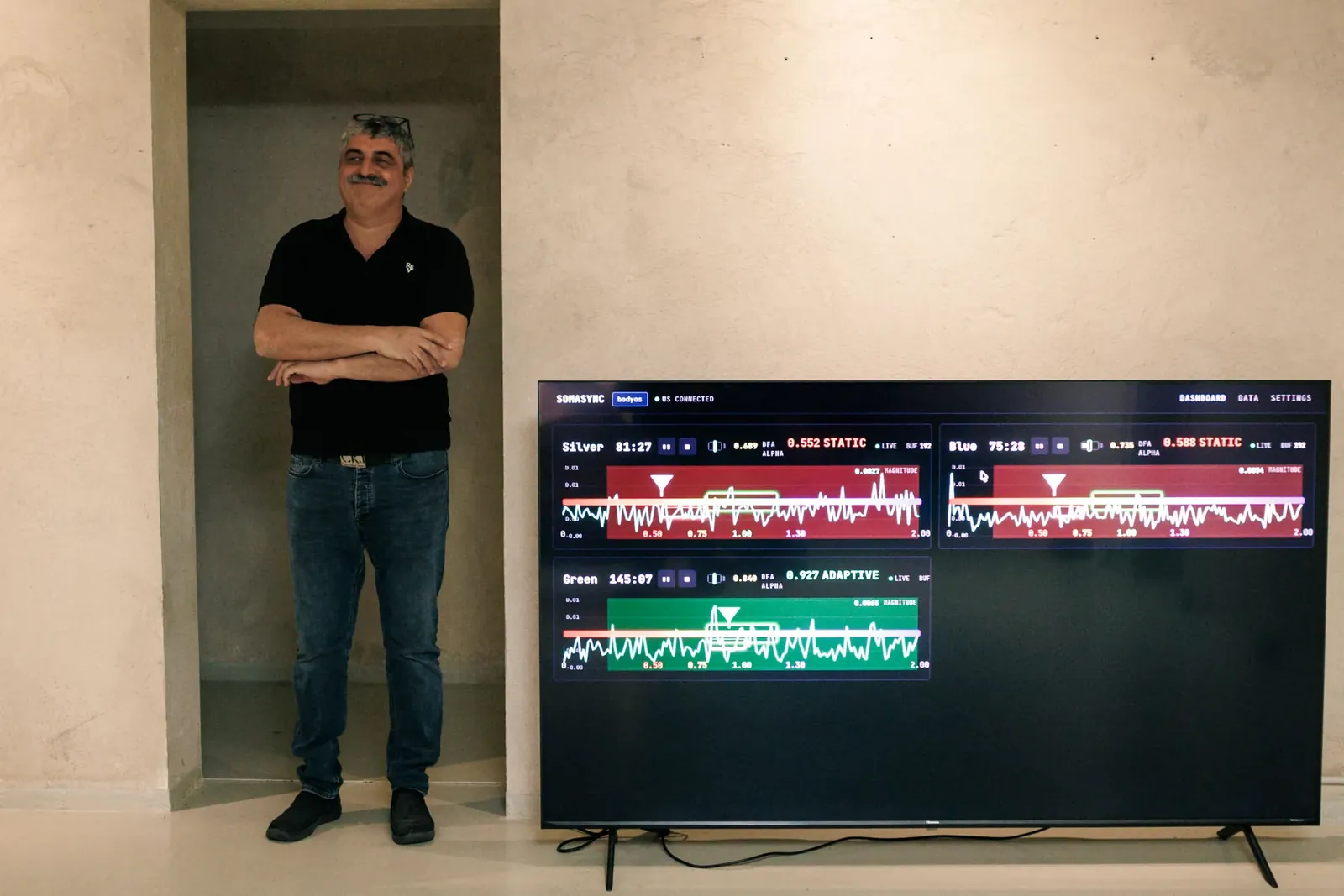
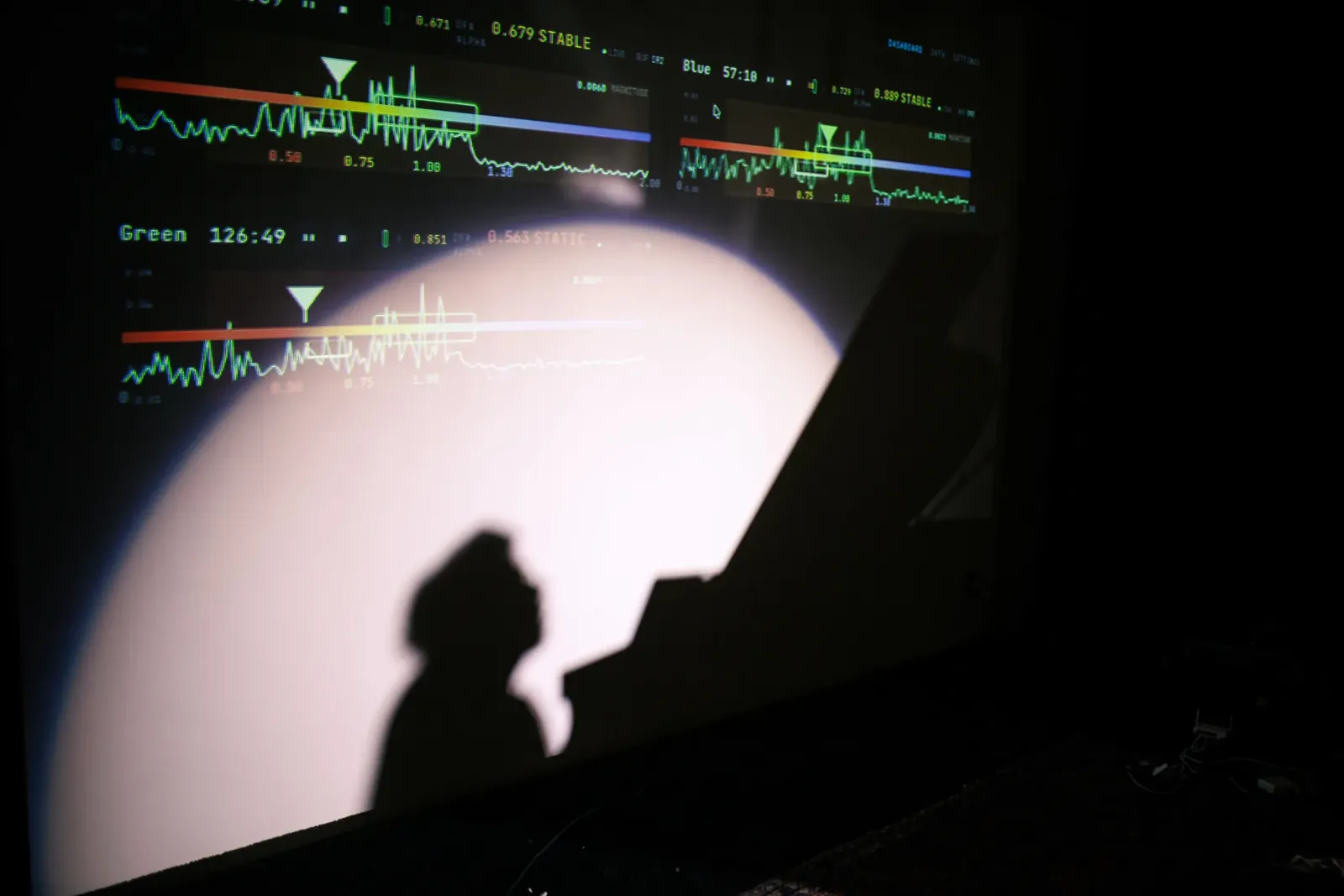
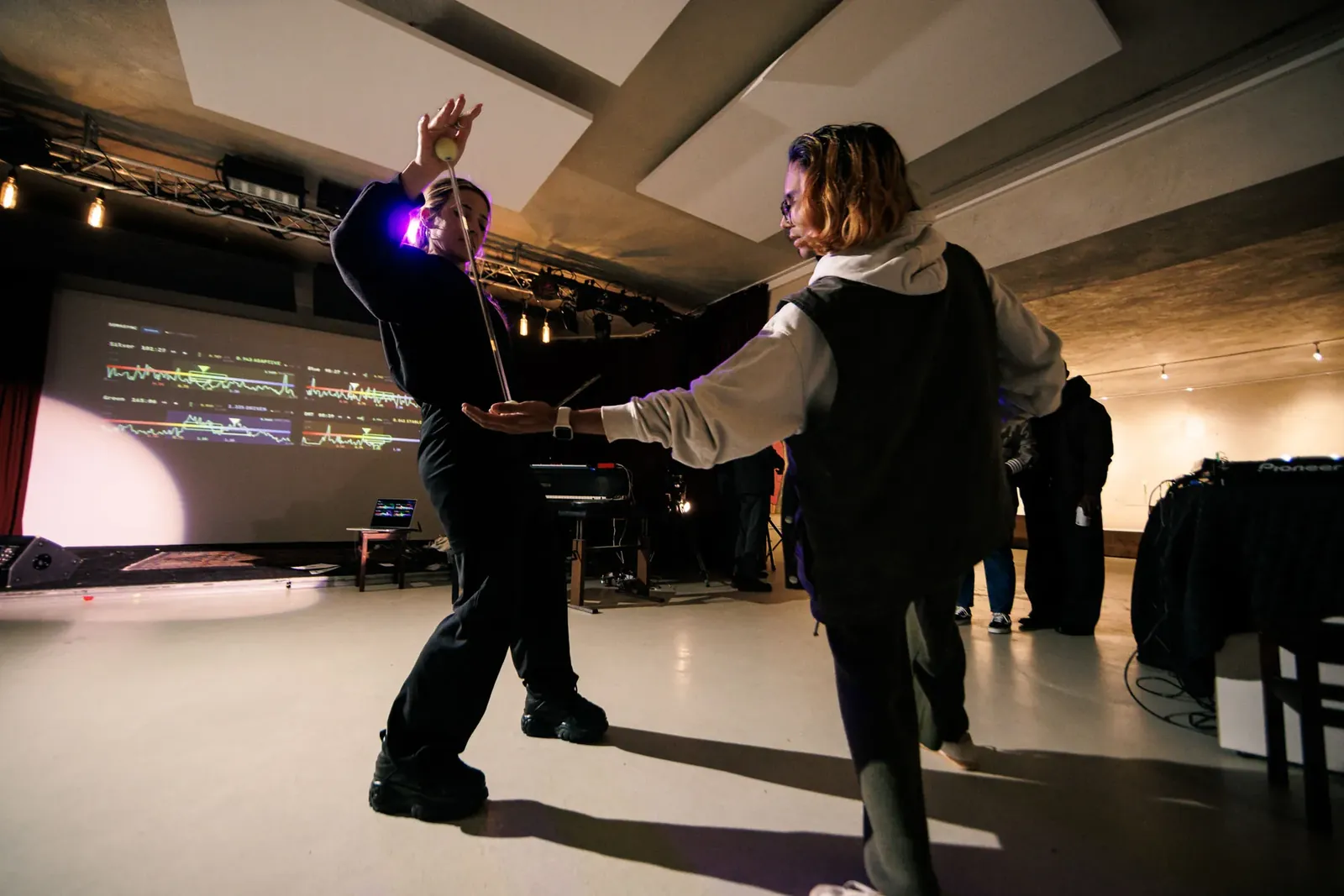
The server ran on a laptop in the room. The dashboard went up on the projection wall and on a second screen on the floor, so it was visible from anywhere in the space.
What the Participants Practised
The feedback was not a score to improve. It was used as a reminder: when your panel shows that you have settled into a pattern, change something.
Participants used the sensors to bring more variability into their movement flow. For example, someone who keeps repeating the same sway can try a sudden stop, a change of level, a smaller or a bigger movement. Someone whose movement is all forced change can slow down and let one gesture develop. The point was not to stay in the adaptive zone but to move between the states on purpose and to feel the difference.
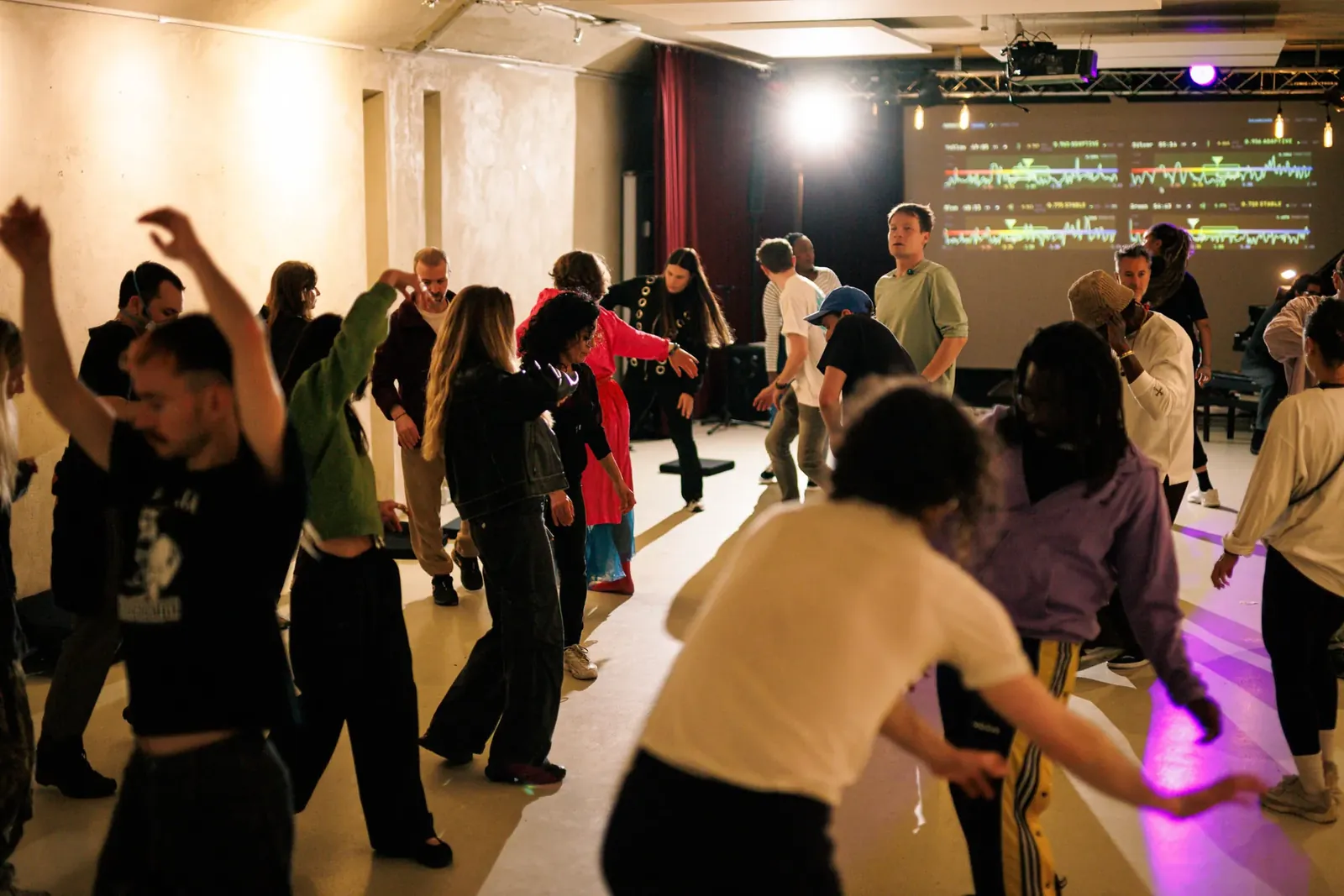
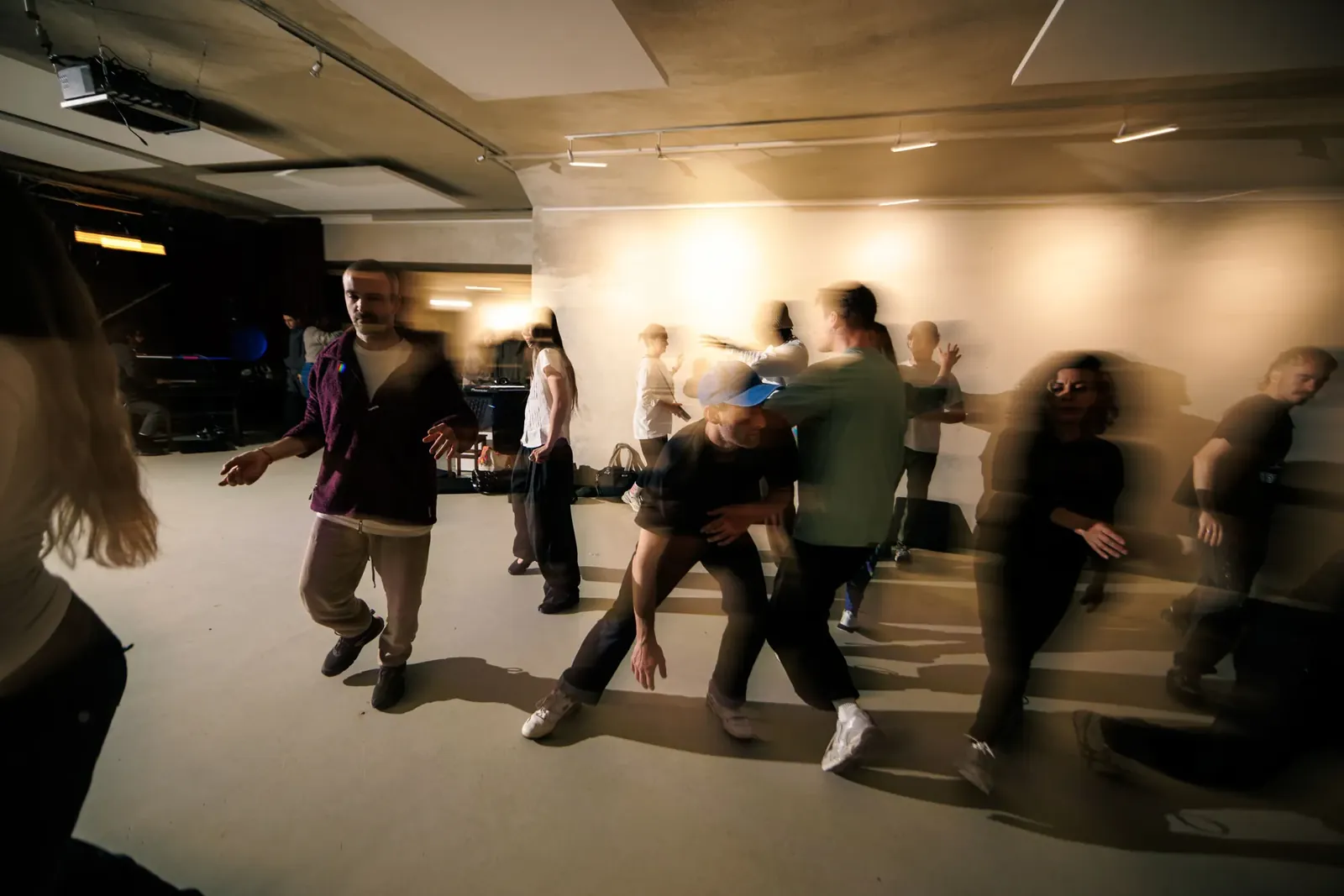
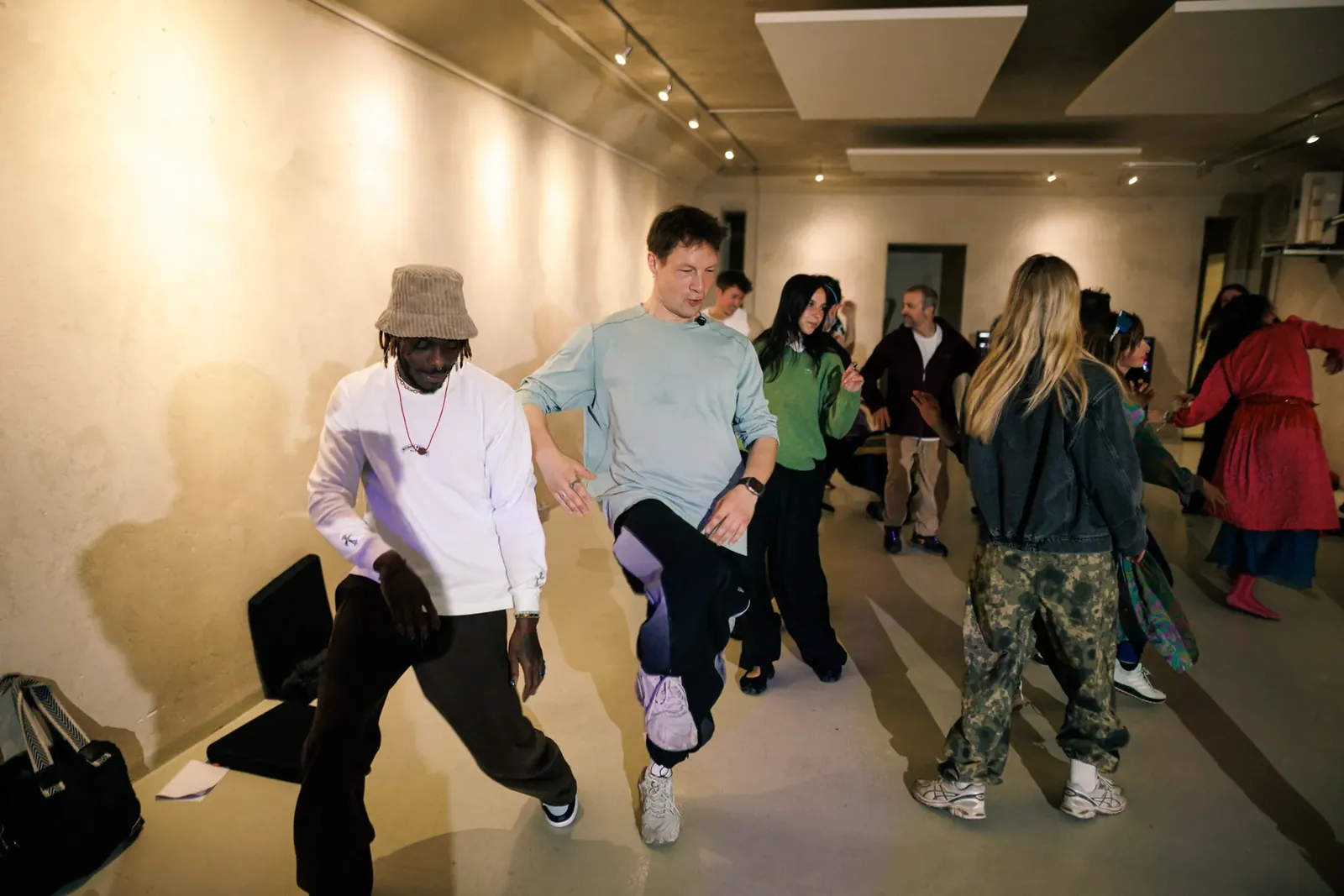
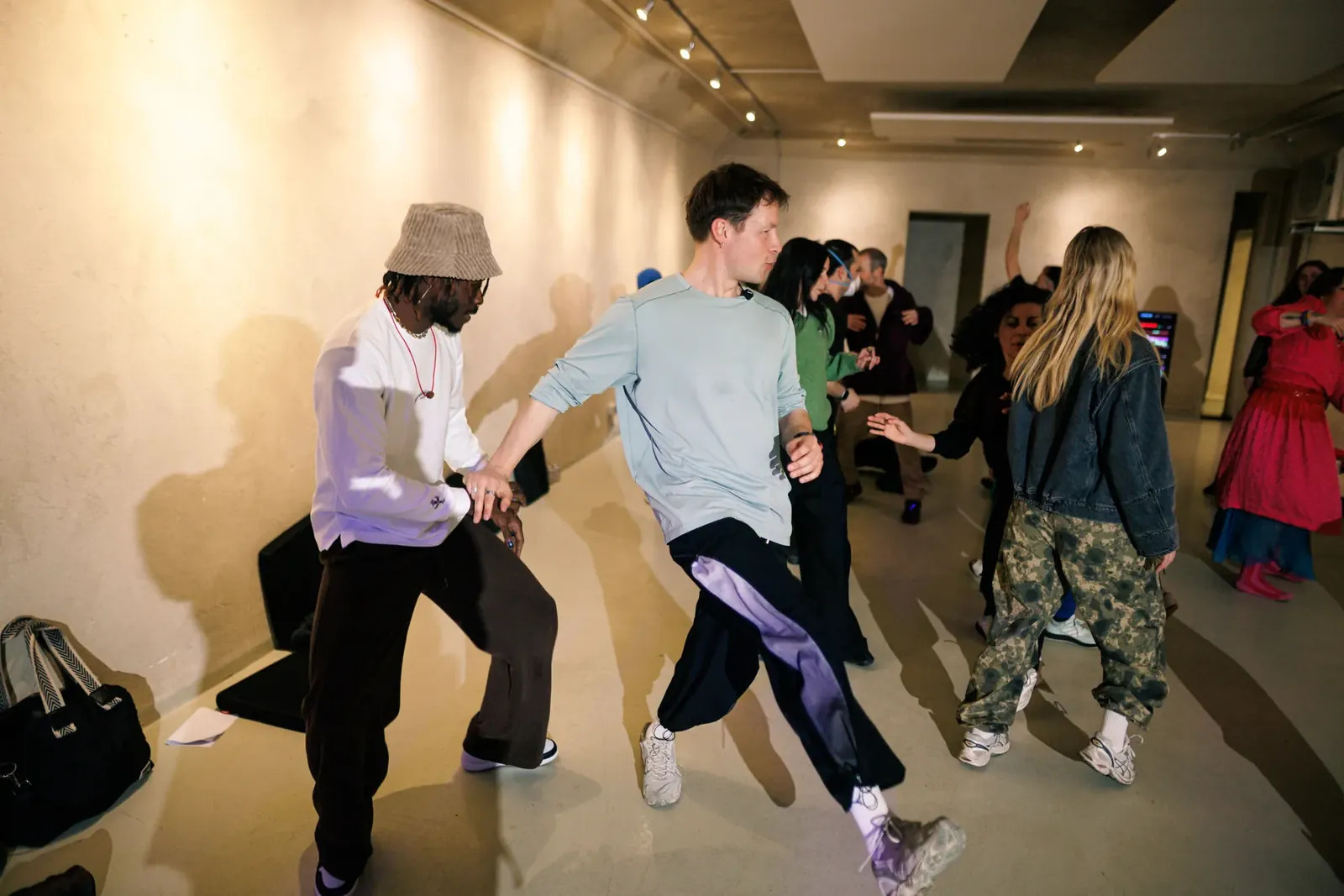
Moving with the sensors on: changing level, speed and direction whenever the movement started to settle.
Then the practice moved from the individual to the group. Because everyone could see everyone else's state, the sensors became a way to interact. Participants explored how to respond to each other in a more adaptable and playful way: mirroring a partner and then breaking the mirror, joining someone's rhythm and then disrupting it, using another person's movement as an invitation to try something new. Patterns that two people fall into together (leading and following, always facing each other, always the same distance) became visible and could be played with as well.
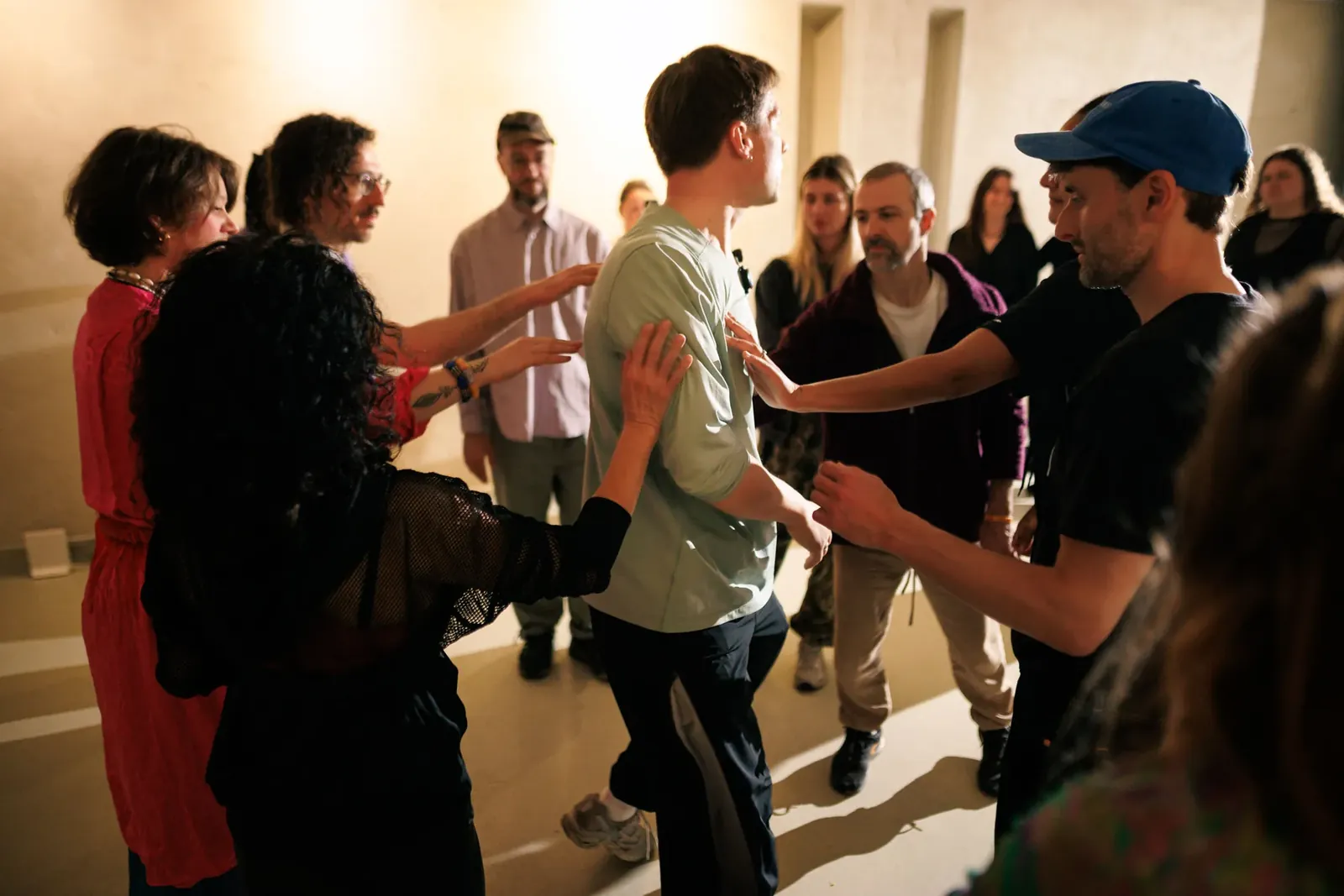
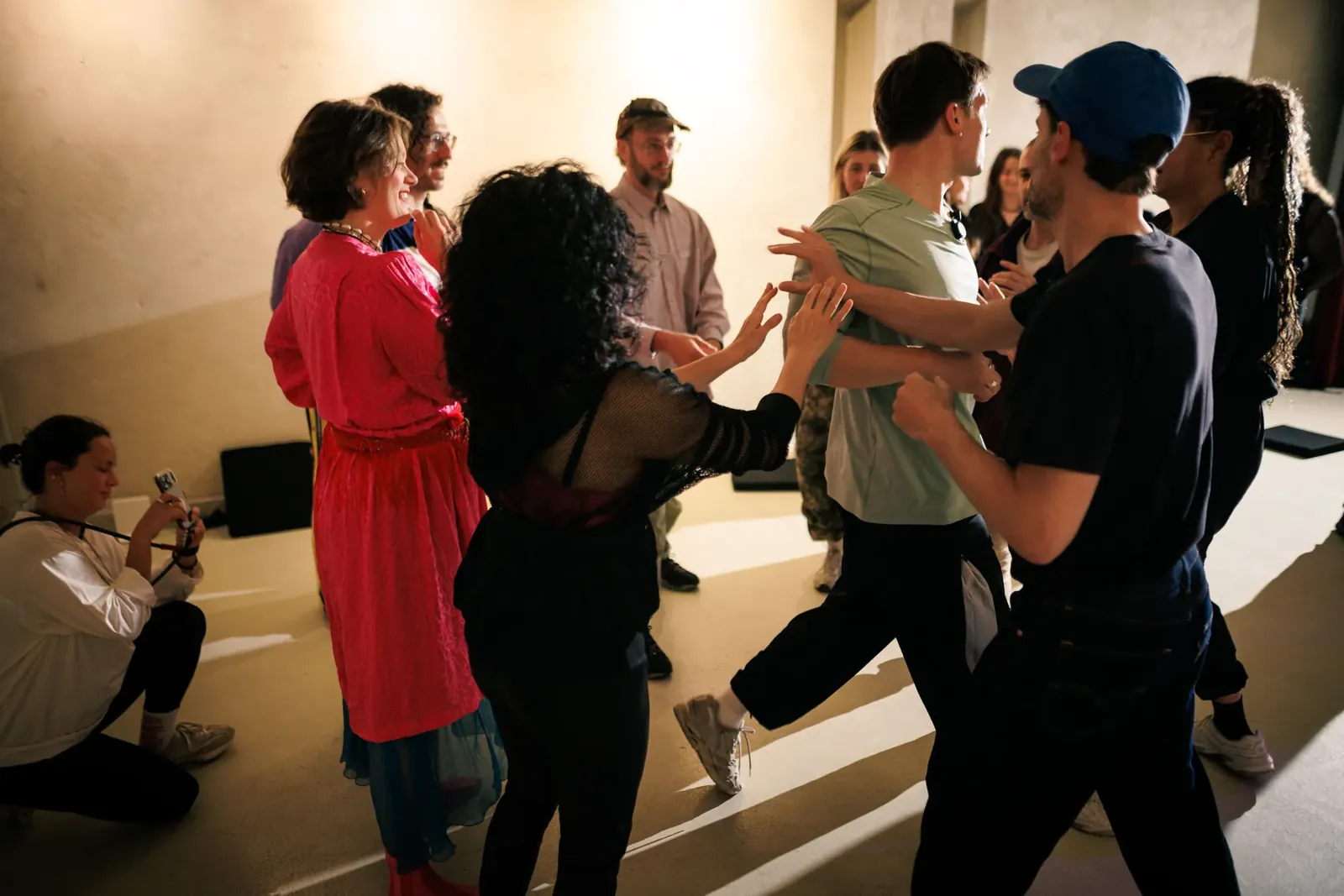
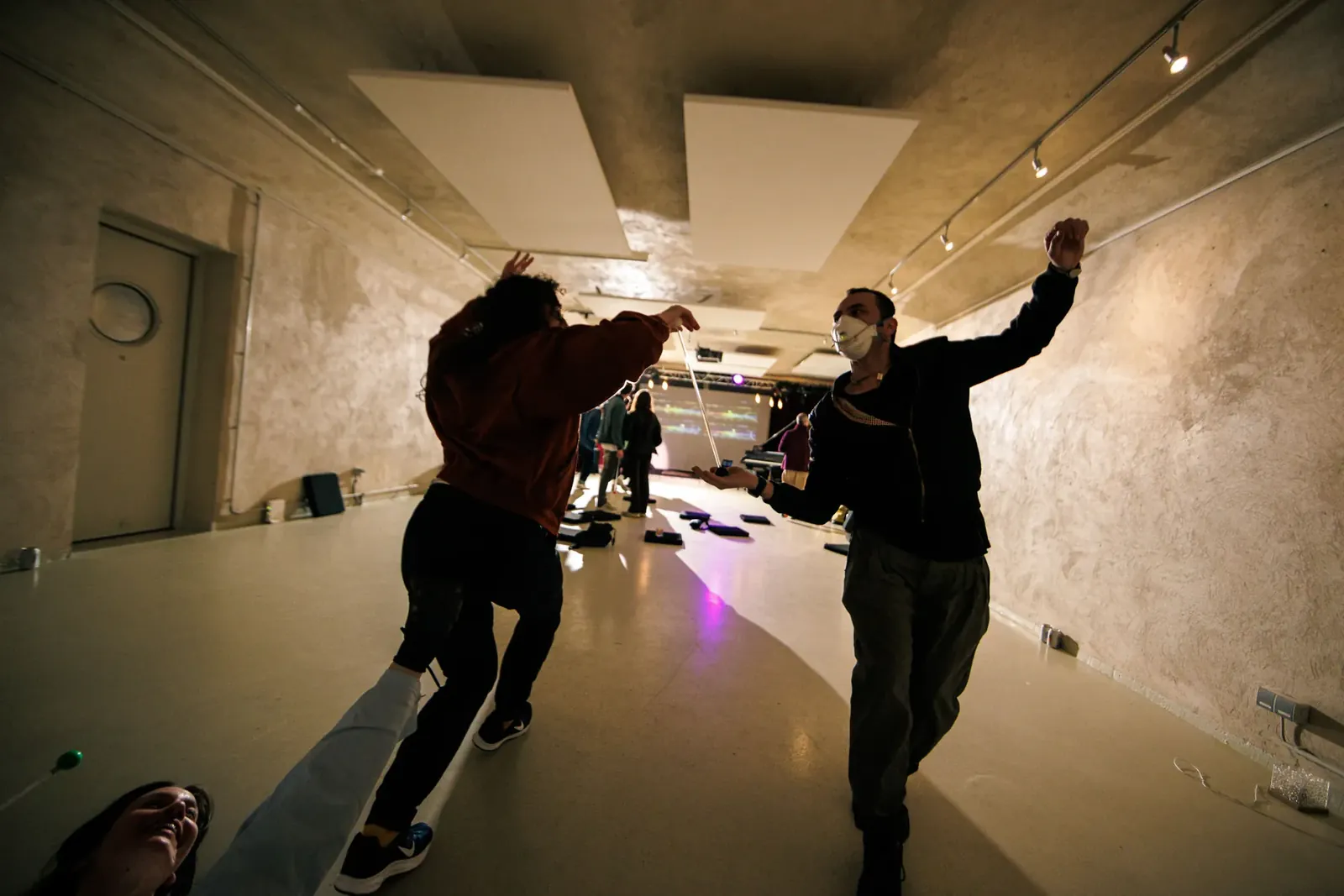
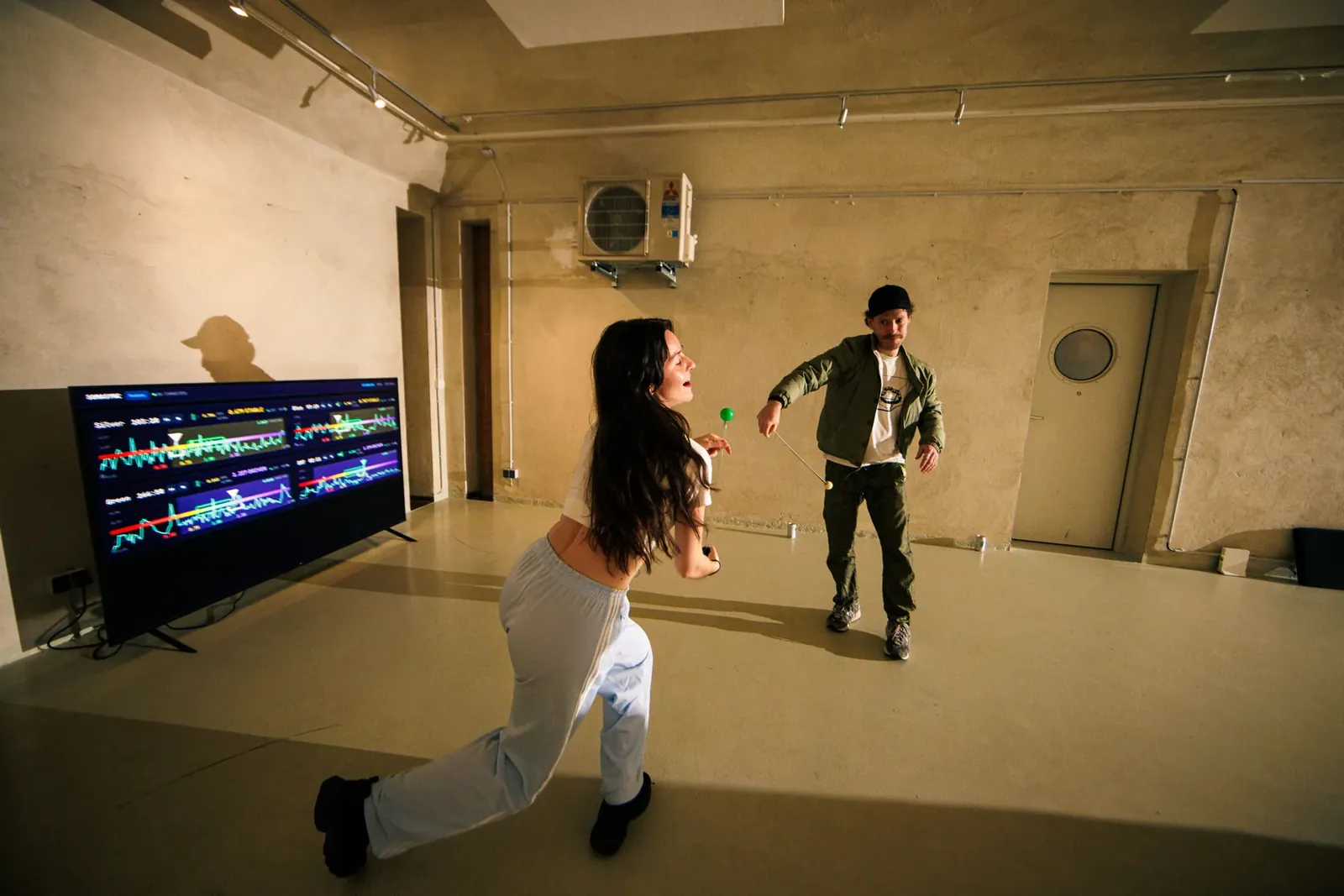
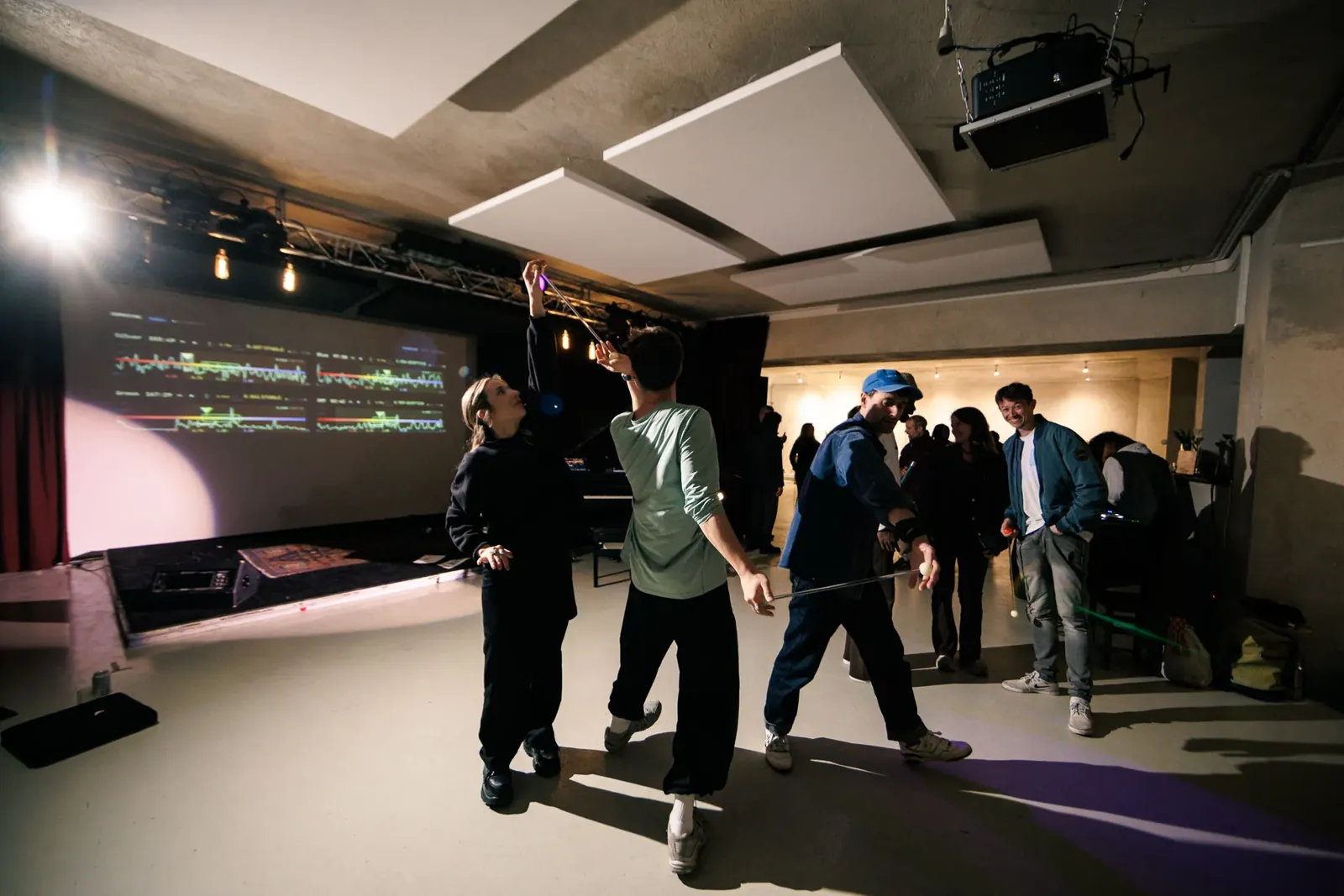
From individual patterns to shared ones: approaching, mirroring, turning around each other and moving apart.
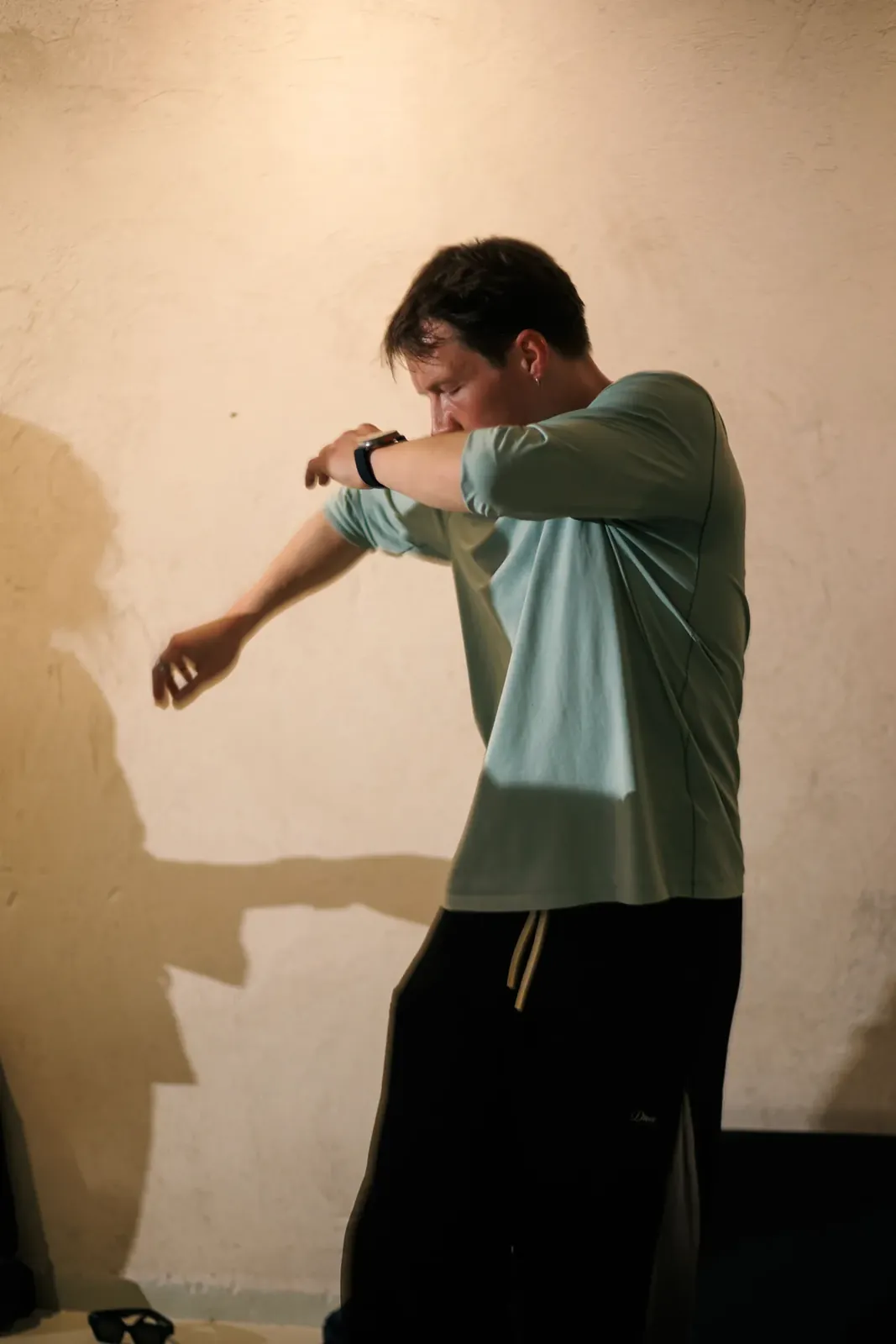
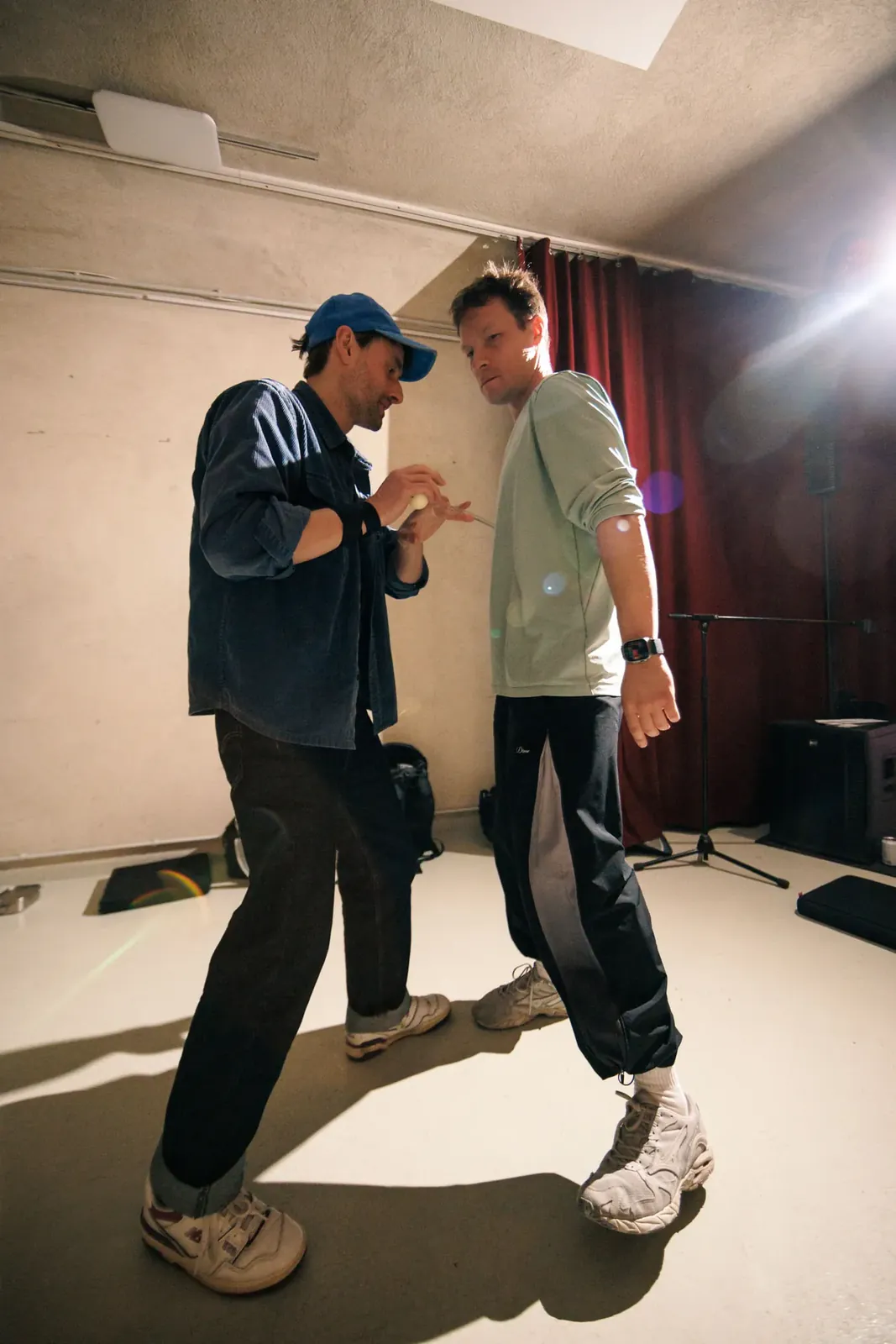
Close and far: the same practice alone and with a partner.
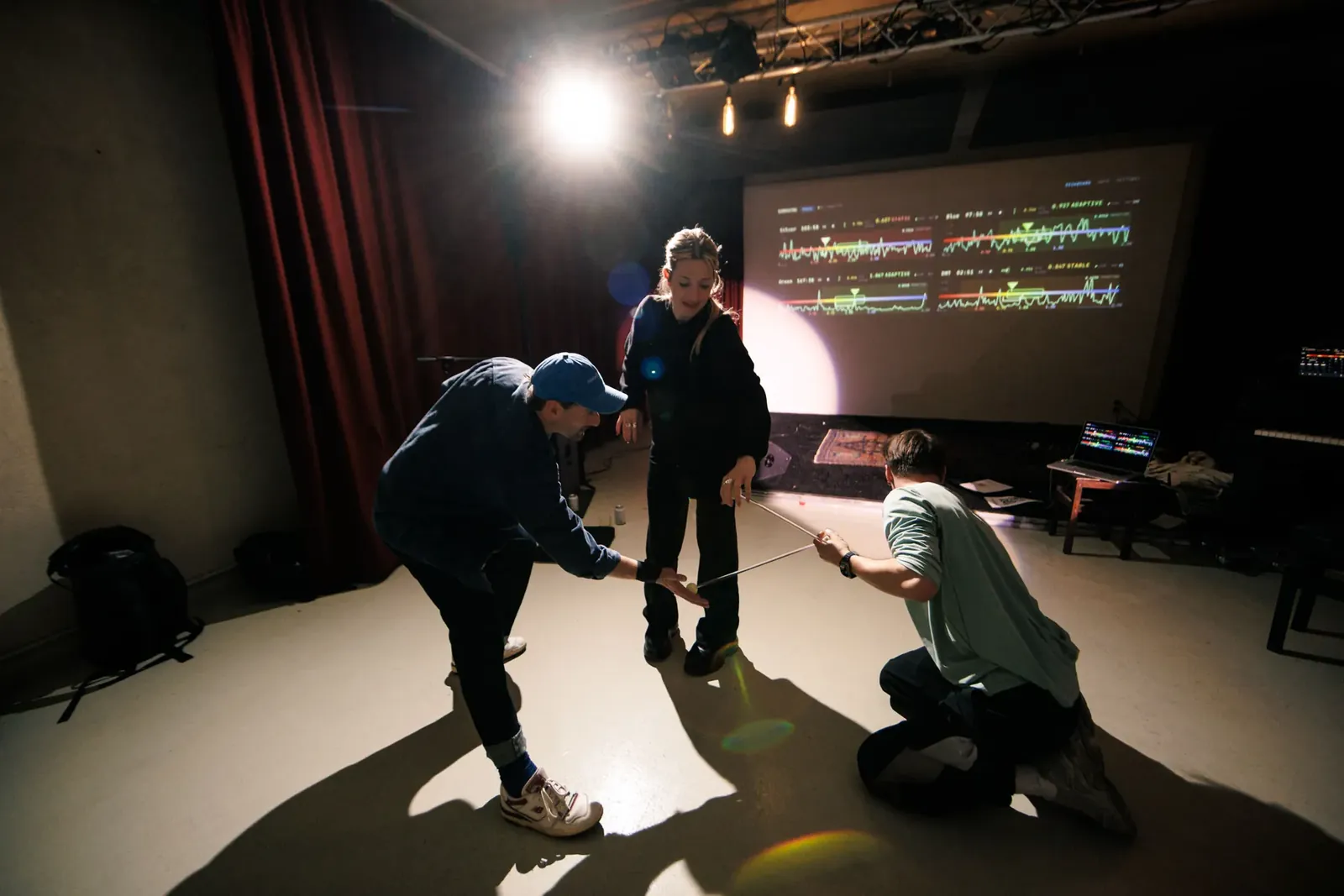
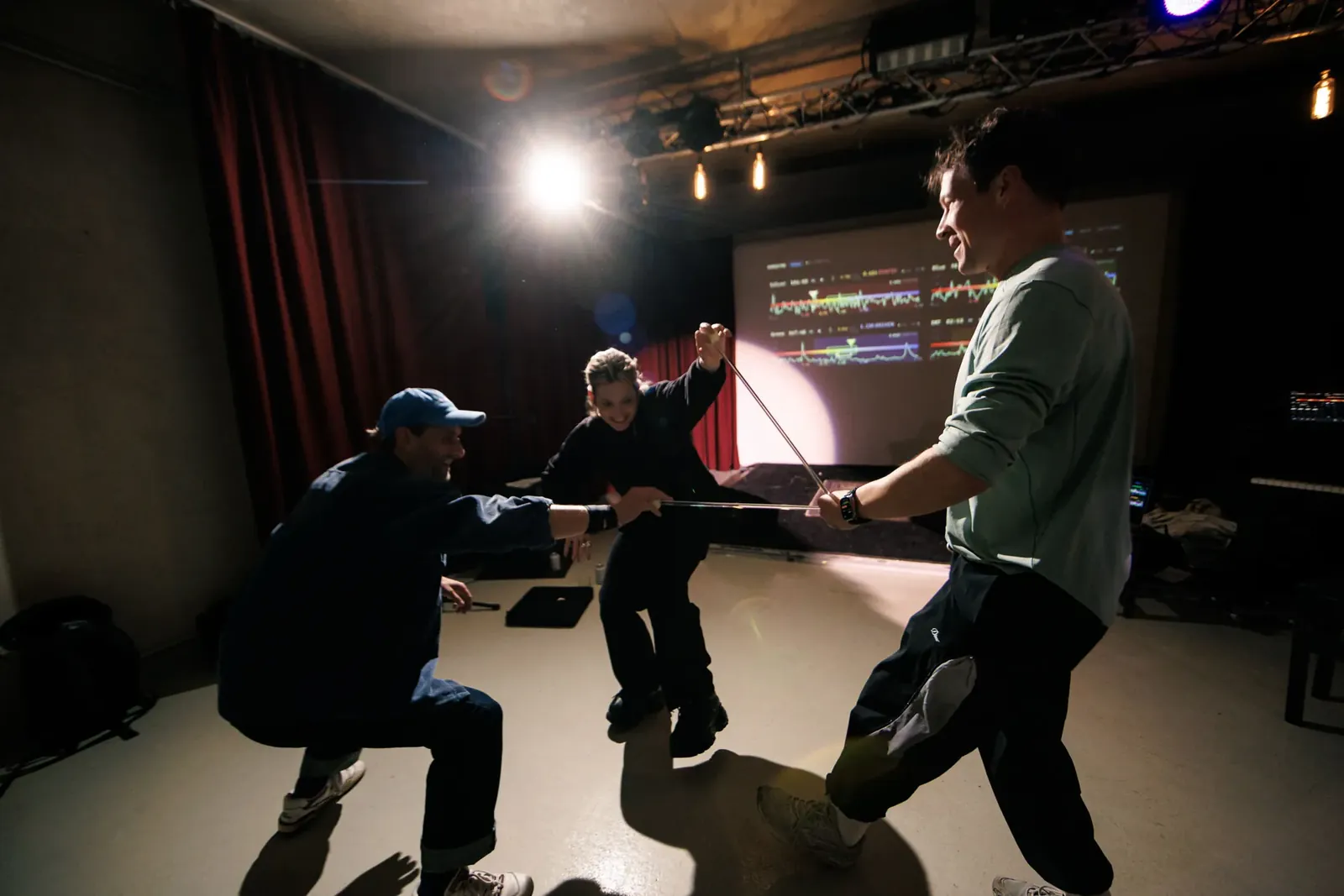
Connected by thin sticks held between the hands, each person's movement passes through the others, and a pattern held by one changes the whole group.
This is the same idea as fractal choreography, where the music plays only while the body moves fractally, and as the variations of the Feldenkrais Method: a habit loosens when you introduce variations into it, and feedback helps you notice when you have stopped varying.
A Practice You Can Try in a Group
You can run a small version of this with two or more people and Movesense sensors connected to the SelfSense Server, or with one sensor and the SelfSense app passed between partners.
- Put a sensor on each person (wrist, hip or ankle) and put the dashboard where everyone can see it.
- Move freely to music for a few minutes and notice which state your panel shows most often.
- Pick a quality to vary: speed, size, level, tension and release. Move between its extremes slowly, then introduce a few contrasting moments inside it.
- Pair up. Follow your partner's movement, then break the pattern you have created together and see what happens to both panels.
- Close your eyes for the last few minutes and move without looking at the screen.
Host an Activation Event
Activation events can run in a studio, a club, a gallery or a workshop space. The server runs on a laptop in the room (Bluetooth reaches only a few metres), it can handle several sensors at once, and it can send the readings over OSC to drive sound or light. If you would like to host one or bring it to your community, get in touch.
To try the practice on your own first, the SelfSense TestFlight beta works with an Apple Watch, an iPhone, a Polar H10 or a Movesense sensor, for movement and for the heart.
Related Reading
- Using Movesense for Tracking Adaptive Resilience — how the sensor reads movement and the heart, and how it connects to the server.
- SelfSense Server and the multi-user server guide — multi-sensor and group sessions.
- Adaptive Movement Variability — what the movement alpha measures.
- Fractal Choreography — sensors, dance and sound.
- BodyOS @ Bunker West Berlin — the event announcement.